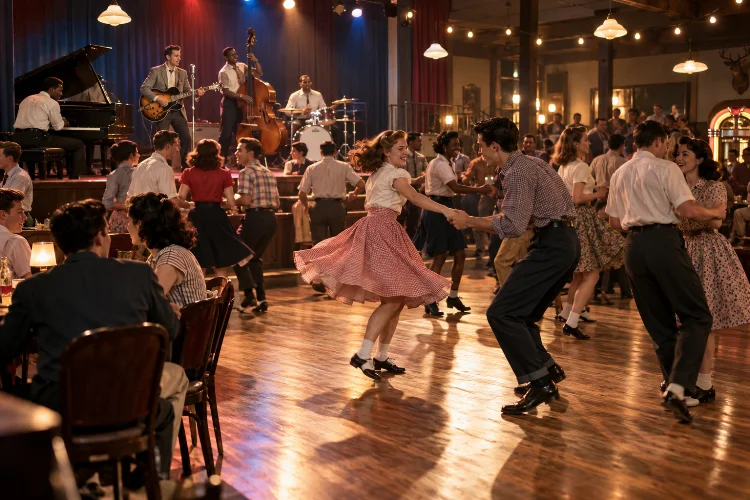
The sound of rock and roll seemed explosive when it entered mainstream American culture during the 1950s. Loud guitars, pounding pianos, energetic singers, and teenagers dancing to records made the music feel completely new.
Yet almost everything that gave early rock its personality had deeper cultural roots.
The cultural roots of rock and roll in 1950s America stretched across African American blues, rhythm and blues, gospel, boogie-woogie, country music, and Southern folk traditions.
These sounds developed within communities that were often seperated by racial segregation, even though musicians constantly listened to, borrowed from, and influenced one another.
At the same time, American society was changing. Teenagers had more purchasing power, radio brought regional music into homes, independent record labels challenged established companies, and electric instruments created increasingly powerful sounds.
Rock and roll emerged from this unusual combination of musical exchange, technology, race, commerce, and youth culture. Understanding those roots makes the music feel less like a sudden invention and more like the result of decades of cultural interaction.
African American Blues Formed a Musical Foundation
Few influences were more important to early rock than the blues.
Developed within African American communities, blues music carried traditions of expressive singing, call-and-response, improvisation, blue notes, and repeating harmonic structures.
The familiar 12-bar blues progression became particularly important because musicians could build countless songs around a relatively simple chord framework.
By the 1940s, migration had carried blues musicians from the rural South into cities such as Chicago and Detroit. Amplified guitars, drums, bass, and harmonica helped create a louder urban blues style capable of filling clubs and competing with other instruments.
That transition mattered enormously for rock.
Rock musicians inherited blues guitar bends, riffs, vocal phrasing, and I-IV-V chord progressions. Even when later recordings sounded faster or brighter, much of their musical vocabulary still came from blues traditions.
The electric guitar, which would eventually become rock’s most recognizable instrument, was already being transformed within blues and rhythm-and-blues scenes before rock and roll had a clear name.
Rhythm and Blues Brought the Beat
If blues supplied much of the harmonic and melodic language, rhythm and blues brought an increasingly danceable pulse.
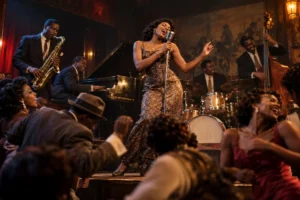
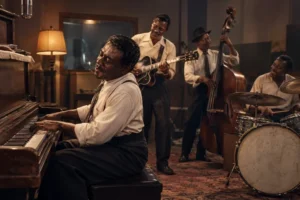
R&B developed during the 1940s as a broad category covering African American popular music that drew from blues, jazz, boogie-woogie, gospel, and swing. Small bands could create enormous energy using drums, bass, piano, saxophone, electric guitar, and powerful vocals.
One crucial feature was the backbeat.
Instead of placing most of the rhythmic weight on the first and third beats of a measure, many R&B performances strongly emphasized beats two and four. That simple pattern became one of the defining characteristics of rock and roll.
Artists such as Fats Domino demonstrated how closely the two styles were connected. His New Orleans recordings combined rolling piano lines, blues harmony, syncopated rhythms, and relaxed vocals.
To later audiences, much of this music sounds unmistakably like early rock.
That is because the boundary between R&B and rock and roll was never completely clear. In many cases, the new genre grew directly from existing African American musical styles rather than replacing them.
Gospel Added Emotional Power and Vocal Drama
Church music also played a major role in shaping rock performance.
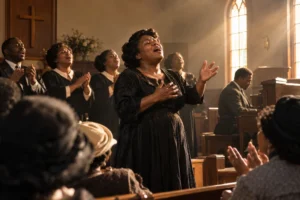
African American gospel traditions emphasized passionate singing, repetition, call-and-response, rhythmic clapping, and intense interaction between performers and audiences. Singers often moved between soft phrases and explosive emotional peaks.
Early rock performers adapted many of these techniques.
Little Richard is one of the clearest examples. His extraordinary vocals could move from singing to shouting, while his piano playing created a relentless rhythmic attack. Although his songs were secular, the energy and vocal techniques behind them reflected gospel traditions.
This changed expectations about what a popular singer could do.
Rock vocals did not need to sound restrained or perfectly polished. Singers could scream, bend notes, repeat words, use rasp, and interact physically with an audience.
That emotional directness eventually influenced soul, hard rock, punk, heavy metal, and countless other genres.
The connection between gospel and rock therefore goes far beyond melody. Gospel helped establish the idea that a performance should feel intense enough to involve the entire room.
Country Music Helped Create the Rockabilly Sound
Rock and roll was not created from African American musical traditions alone.
Country and western music also contributed guitar techniques, vocal styles, storytelling traditions, and rhythmic patterns. This influence was particularly visible in the American South, where musicians could hear country, blues, gospel, and R&B within the same regional environment.
Rockabilly became one of the clearest examples of that mixture.
Performers such as Elvis Presley, Carl Perkins, and Jerry Lee Lewis combined country elements with blues and rhythm-and-blues rhythms. Slap bass, bright electric guitar, energetic vocals, and simple arrangements created a sound that felt both familiar and radically new.
Sun Records in Memphis became especially important because the city sat at a musical crossroads.
Southern Black and white traditions were culturally distinct, but musicians were exposed to one another through radio, records, live venues, and local communities. Rockabilly emerged partly from this complicated exchange.
The result helped make early rock accessible to audiences who already listened to country while retaining strong rhythmic connections to R&B.
Radio Broke Down Musical Boundaries
Technology helped these different musical traditions reach listeners who might otherwise never have encountered them.
Radio was especially important.
During the 1950s, young listeners could tune in to stations broadcasting rhythm and blues, country music, and regional performers. Music that had once circulated mainly within specific communities could suddenly reach listeners across racial and geographical lines.
Disc jockeys also became powerful cultural figures.
Alan Freed famously helped popularize the phrase “rock and roll” while promoting rhythm-and-blues records to wider audiences. Radio programming allowed teenagers to encounter Black performers whose music was often absent from more conservative mainstream media.
This exposure helped transform listening habits.
A teenager did not necessarily care which marketing category a record belonged to. If the beat was exciting and the singer sounded different from mainstream pop, that could be enough.
Radio therefore became more than a distribution technology. It acted as a cultural meeting place where musical boundaries became harder to maintain.
Teenagers Became a New Cultural Force
Another reason rock and roll exploded during the 1950s was the changing position of teenagers in American society.
Following World War II, economic growth gave many young Americans more disposable income than earlier generations had enjoyed. Teenagers could spend money on records, clothing, jukeboxes, movies, concerts, and eventually portable radios.
This created a valuable new consumer market.
Record companies quickly realized that young listeners did not always want the same entertainment as their parents. Rock and roll offered something more energetic, direct, and slightly dangerous.
The music also gave teenagers a sense of identity.
Songs increasingly addressed school, dating, cars, dancing, frustration, and independence. Chuck Berry became especially influencial because his lyrics frequently focused on experiences that young audiences immediately understood.
The sound mattered, but the message mattered too.
Rock became connected with the idea that teenagers represented a distinct generation with their own tastes and cultural power.
Race Was Central to Rock and Roll’s Story
It is impossible to understand early rock without discussing race.
American society during the 1950s remained deeply segregated. Black musicians created many of the styles and techniques that shaped rock and roll, yet they often faced unequal access to radio, touring opportunities, mainstream promotion, and financial rewards.
White performers sometimes recorded versions of songs previously released by Black artists. These cover versions could receive wider distribution because mainstream radio stations and retailers were often more comfortable promoting white performers.
This created complicated questions about cultural exchange and appropriation.
At the same time, rock and roll helped expose young white audiences to African American music on an unprecedented scale. Listeners began buying recordings by artists such as Chuck Berry, Little Richard, Fats Domino, and Bo Diddley.
The music could cross boundaries that society tried to maintain.
That did not erase discrimination, but it made popular culture harder to keep racially divided. Rock’s early history is therefore inseparable from the wider struggles over race, integration, and cultural recognition taking place across 1950s America.
Independent Labels Helped New Sounds Reach the Public
Major record companies did not immediately understand the growing market for blues, R&B, and early rock.
Independent labels often moved faster.
Companies such as Sun Records, Chess Records, Specialty Records, and Atlantic Records worked with artists and styles that larger companies sometimes considered too regional or commercially risky.
These smaller operations could react quickly when a record gained local attention.
Chess became closely associated with electric blues and artists such as Muddy Waters and Chuck Berry. Specialty released important recordings by Little Richard, while Sun played a key role in the careers of Elvis Presley, Carl Perkins, and Jerry Lee Lewis.
Independent studios also encouraged experimentation.
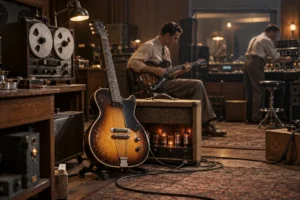
Musicians could work with unusual amplifier sounds, echo effects, aggressive piano playing, and less formal arrangements. The recordings were not always technically perfect, but that imperfection often created personality.
What sounded rough compared with polished mainstream pop could sound thrilling to younger listeners.
That contrast became part of rock’s identity.
Rebellion Became Part of the Rock and Roll Image
The cultural impact of rock extended beyond music.
To many adults in the 1950s, the genre appeared loud, sexually suggestive, racially disruptive, and difficult to control.
Dancing styles, stage movements, clothing, and teenage enthusiasm generated concern among parents, religious organizations, and conservative commentators.
That criticism made the music even more attractive to some young listeners.
Elvis Presley’s hip movements, Little Richard’s flamboyant performances, and Chuck Berry’s famous duck walk made rock visually exciting as well as musically distinctive.
This was an important developement.
Popular musicians were becoming personalities whose appearance and behavior mattered almost as much as their recordings.
Rock therefore became connected with rebellion, even when individual songs were relatively harmless.
The idea that music could represent generational resistance would survive long after the 1950s, influencing everything from 1960s counterculture to punk and alternative rock.
The Cultural Mix Created Something New
No single musician, city, or musical tradition can claim complete ownership of rock and roll.
Its development was a process of interaction.
Blues contributed harmony and expressive guitar playing. R&B provided strong grooves and backbeats. Gospel supplied vocal intensity.
Country brought additional guitar techniques and storytelling traditions. Radio connected audiences, while independent labels captured sounds that major companies initially overlooked.
The teenage market then created commercial momentum.
What made rock revolutionary was not that every ingredient was new. Most of them had existed for years.
The innovation came from combining them in a cultural environment that was changing quickly.
By the mid-1950s, these ingredients had become powerful enough to reshape the American music industry – and eventually popular culture around the world.
Exploring the cultural roots of rock and roll reveals that the genre was never simply about electric guitars and rebellious teenagers. It emerged from decades of blues, rhythm and blues, gospel, country, technological change, racial interaction, and shifting youth culture.
Artists such as Chuck Berry, Little Richard, Fats Domino, and Elvis Presley brought different traditions into the same rapidly expanding musical world. Radio stations, independent labels, and teenage consumers then helped those sounds travel far beyond their original communities.
The result was one of the most important cultural transformations in modern music history.
Next time you hear a classic 1950s rock recording, listen beyond the familiar beat. Trace the blues riffs, gospel vocals, country phrasing, and R&B groove underneath it—you may hear an entire history of American music in just three minutes.